TMVR Specialist in Bangalore
Transcatheter Mitral Valve Replacement (TMVR) in Bangalore | Dr. Sreekanth Shetty
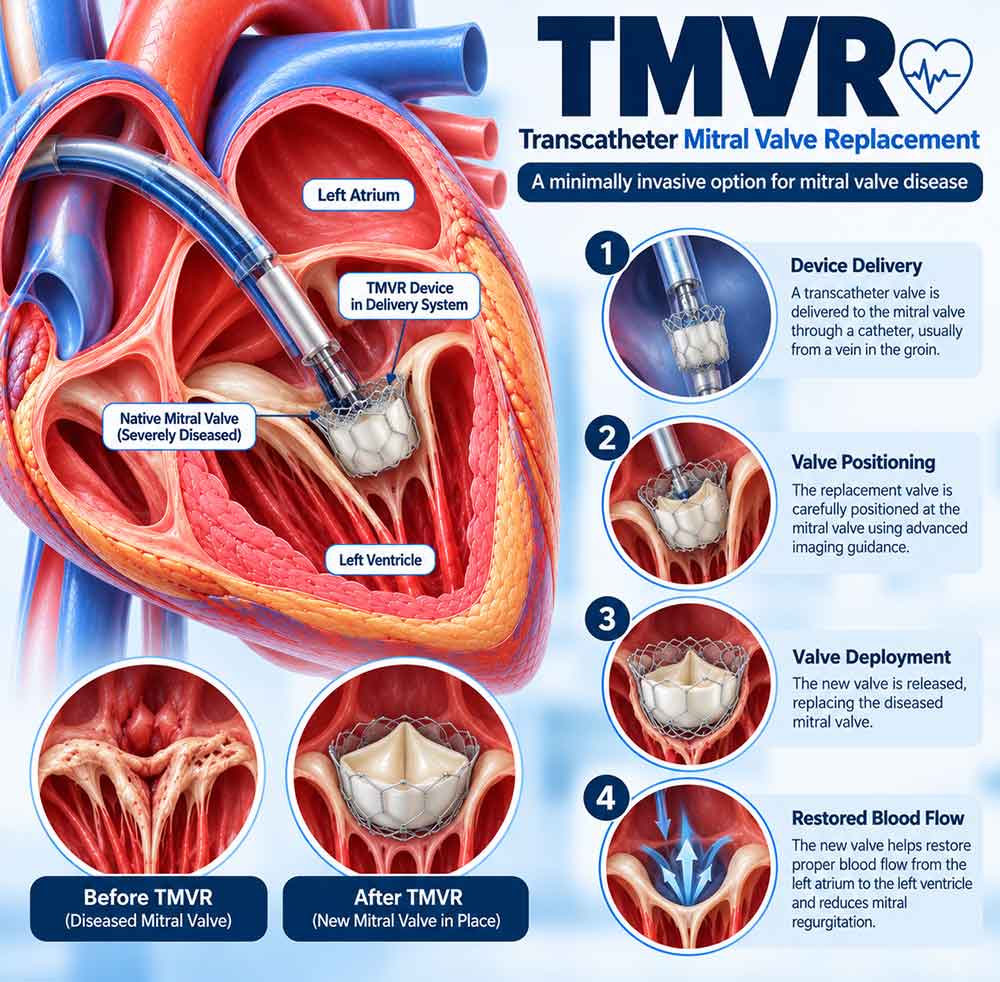
Transcatheter mitral valve replacement (TMVR) is a catheter-based procedure that may offer a treatment option for selected patients with mitral valve disease. It involves placing a replacement valve within the diseased mitral valve or, in certain cases, within a previously implanted valve.
If you are searching for TMVR in Bangalore, a specialist consultation can help you understand your diagnosis, the available treatment options and whether a catheter-based valve replacement may be suitable for your condition. Treatment decisions depend on detailed heart imaging, symptoms, overall health and assessment by an experienced multidisciplinary heart team.
What Is Transcatheter Mitral Valve Replacement (TMVR)?
The mitral valve controls blood flow between the left atrium and the left ventricle. When the valve becomes narrowed or does not close properly, it can affect the normal flow of blood through the heart.
Transcatheter mitral valve replacement, commonly called TMVR, uses a catheter to deliver a replacement valve to the mitral valve position. The new valve is then deployed to help restore its function.
Unlike conventional open-heart valve replacement, a transcatheter approach may avoid a large chest incision in appropriately selected patients. However, the access route, procedure and suitability vary according to the patient’s anatomy, the type of valve disease and the specific treatment system.
Who May Be Evaluated for TMVR?
A heart specialist may consider a TMVR assessment for selected patients with:
Significant mitral valve disease causing symptoms or affecting heart function.
Mitral regurgitation, where blood flows backward through the mitral valve.
Mitral stenosis, where the valve opening becomes narrowed, in suitable clinical circumstances.
A previously implanted surgical or transcatheter valve that is no longer functioning properly, where a valve-in-valve procedure may be appropriate.
A high risk from conventional surgery or other clinical factors that warrant assessment for a catheter-based option.
Not every patient with mitral valve disease is suitable for TMVR. A specialist team must assess the valve anatomy, heart function, previous procedures, potential risks and expected benefits before recommending treatment.
TMVR Procedure in Bangalore
TMVR requires careful planning and specialist imaging. The exact steps depend on the patient’s condition and the type of transcatheter valve being considered.
1. Detailed Heart Evaluation
The team reviews symptoms, medical history, current medicines and previous heart procedures. Investigations may include echocardiography, transoesophageal echocardiography and CT imaging to assess the mitral valve and plan the procedure.
2. Catheter-Based Valve Delivery
Depending on the selected system and the patient’s anatomy, the replacement valve is delivered through a catheter using the planned access route. The team uses appropriate imaging to guide the device towards the mitral valve.
3. Valve Positioning and Deployment
The replacement valve is positioned within the intended mitral valve location and deployed according to the device’s procedure requirements. The team assesses valve function and blood flow using imaging and other monitoring methods.
4. Recovery and Follow-Up
After the procedure, the patient is monitored for recovery and potential complications. The length of hospital stay and recovery period vary according to the patient’s health, the procedure and clinical progress.
Potential Benefits of TMVR
For appropriately selected patients, a transcatheter mitral valve replacement approach may offer:
A catheter-based alternative to conventional open-heart surgery in selected cases.
Treatment options for certain patients who have a high risk from conventional surgery.
The possibility of improving symptoms related to mitral valve disease.
A recovery pathway that may differ from that of conventional surgery.
The benefits are not guaranteed. The suitability of TMVR and the expected outcome must be assessed individually. The procedure also has important risks that should be discussed with the treating heart team.
TMVR Risks and Considerations
TMVR is a complex heart procedure. Potential complications may include bleeding, blood-vessel injury, infection, blood clots or stroke, valve displacement or leakage, obstruction of blood flow, and other heart-related complications.
Some patients may require additional treatment or surgery if a complication occurs or the valve does not function as intended. The specific risks depend on the patient’s condition, anatomy and the device used.
Before choosing a treatment, ask the heart team about expected benefits, available alternatives, device suitability, procedural risks and follow-up requirements.
Mitral Valve Replacement in Bangalore
Patients searching for mitral valve replacement in Bangalore may need an evaluation to determine whether conventional surgery, a catheter-based procedure, valve repair or medical management is most appropriate.
The decision depends on the type and severity of valve disease, symptoms, heart function, previous valve surgery and overall health. A specialist consultation can help explain the treatment options and whether further imaging or a multidisciplinary heart-team review is required.
TMVR Specialist in Bangalore
Evaluation for transcatheter mitral valve replacement requires detailed imaging and careful consideration of the available treatment options. A specialist can help interpret investigation reports and explain whether a catheter-based approach may be appropriate.
If you are looking for a TMVR specialist in Bangalore, bring your echocardiography reports, previous discharge summaries, details of any earlier valve procedures and your current medication list to your consultation.
Mitral Valve Replacement in HSR Layout
Patients looking for mitral valve replacement in HSR Layout can seek specialist advice about mitral valve disease, available treatments and whether referral for a transcatheter procedure may be appropriate.
The best treatment varies from patient to patient. Conventional surgery, valve repair, catheter-based treatment and medical management may all be considered depending on the clinical findings.
Please confirm the current consultation location before visiting.
TMVR Specialist in HSR Layout
If you are searching for a TMVR specialist in HSR Layout, a consultation can help you understand the findings from your heart investigations and the next steps in treatment planning.
Bring previous echocardiograms, CT reports if available, details of any previous heart-valve procedures and your current medication list. Confirm the doctor’s consultation location and whether TMVR evaluation or treatment is available through the relevant hospital.
Recovery After TMVR
Recovery depends on the patient’s overall health, the procedure performed and whether any complications occur. Your care team will provide instructions regarding medicines, activity, wound care and follow-up appointments.
Regular follow-up may include clinical assessment and heart imaging to monitor valve function. Take prescribed medicines as directed and do not change or stop them without consulting your treating clinician.
Frequently Asked Questions About TMVR
What does TMVR stand for?
TMVR stands for transcatheter mitral valve replacement. It is a catheter-based procedure used to replace a diseased mitral valve in selected patients.
What is the difference between TMVR and MitraClip?
TMVR replaces the mitral valve using a replacement valve. MitraClip is a catheter-based repair technique that brings parts of the existing mitral valve leaflets closer together to reduce leakage. They are different procedures used for different clinical situations.
Is TMVR suitable for every patient with mitral valve disease?
No. Suitability depends on the valve problem, anatomy, heart function, previous procedures, other health conditions and the available treatment system. A specialist heart team must assess each case.
Is TMVR the same as conventional mitral valve replacement surgery?
No. Conventional mitral valve replacement generally involves surgery, while TMVR uses a catheter-based approach. Not every patient is eligible for a transcatheter procedure, and conventional surgery may be the preferred option for some patients.
What tests are needed before TMVR?
Assessment may include an echocardiogram, transoesophageal echocardiography, CT imaging and other tests based on the patient’s condition. The heart team decides which investigations are needed.
What are the possible risks of TMVR?
Potential risks include bleeding, blood-vessel injury, stroke, blood clots, valve displacement, leakage around the replacement valve and other heart-related complications. Your treating team can explain the risks relevant to your case.
Where can I ask about mitral valve replacement in Bangalore?
You can arrange a consultation with Dr. Sreekanth Shetty to discuss your heart investigations and available treatment options. Confirm the current consultation location and the availability of TMVR evaluation or treatment before booking.
For general information about mitral valve replacement and available treatment approaches, read the Wikipedia article on mitral valve replacement.