Arrhythmia Specialist in Bangalore
Expert Arrhythmia Care and Rhythm Management in Bangalore | Dr. Sreekanth Shetty
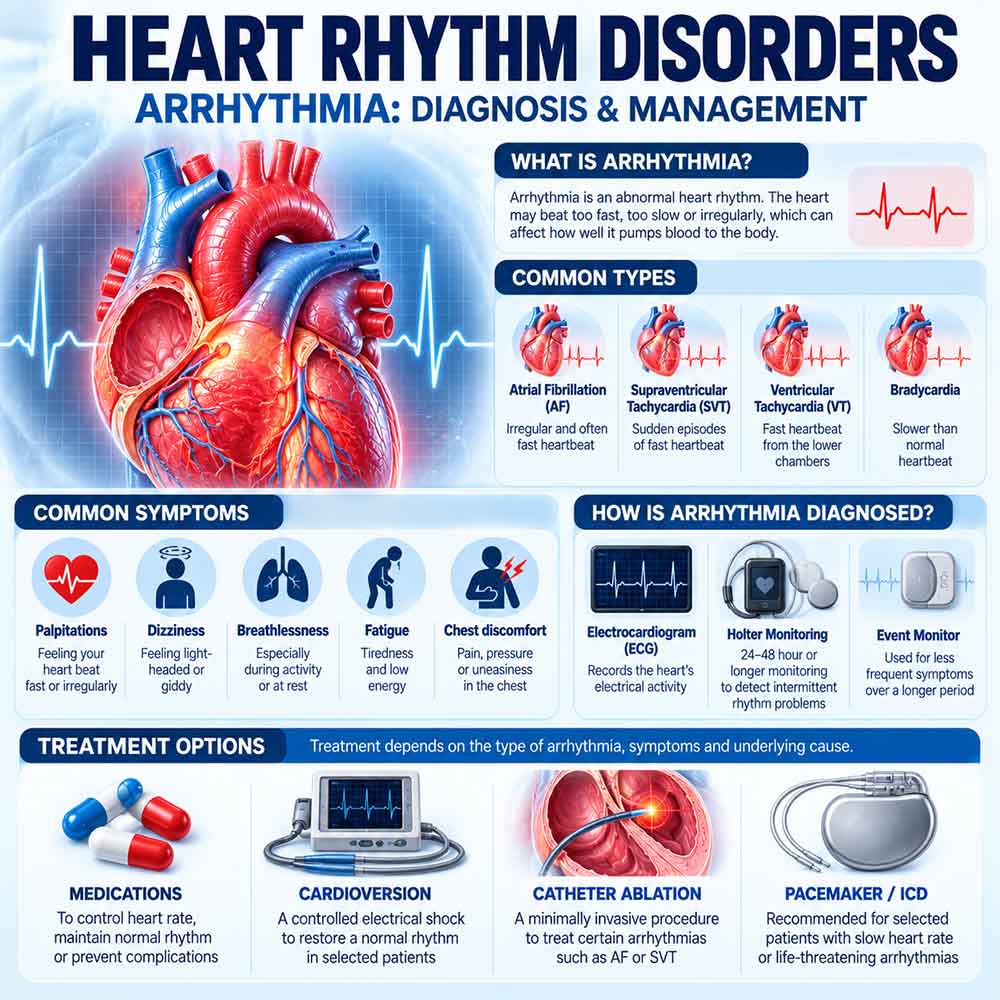
A heart rhythm disorder, also known as an arrhythmia, occurs when the heart beats too quickly, too slowly or irregularly. Some rhythm changes are harmless, while others may require medical evaluation and treatment to reduce symptoms and prevent complications.
If you are looking for an arrhythmia specialist in Bangalore, a cardiology assessment can help identify the type of rhythm problem, investigate possible causes and determine the most appropriate treatment. Dr. Sreekanth Shetty can help you understand the importance of heart rhythm evaluation and the options that may be considered for your condition.
What Is a Heart Rhythm Disorder?
The heart uses electrical signals to coordinate its heartbeat. An arrhythmia occurs when these signals do not function normally, causing the heart to beat too fast, too slowly or irregularly.
The effects vary according to the type of arrhythmia, its duration and the person’s overall heart health. Some people have occasional palpitations without a serious underlying problem, while others need ongoing monitoring, medication or a procedure.
Common Types of Arrhythmia
Atrial Fibrillation
Atrial fibrillation (AF) causes an irregular heartbeat and may increase the risk of blood clots and stroke. Management may involve heart-rate or rhythm control and assessment of whether blood-thinning medication is needed.
Supraventricular Tachycardia
Supraventricular tachycardia (SVT) refers to episodes of an unusually fast heartbeat that begin above the heart’s lower chambers. Depending on the type and symptoms, management may include medication, specific clinician-recommended techniques or catheter ablation.
Ventricular Tachycardia
Ventricular tachycardia begins in the lower chambers of the heart and can be serious. Urgent assessment is important, particularly when it causes fainting, chest discomfort or severe breathlessness.
Bradycardia
Bradycardia means that the heart rate is slower than expected. It may be normal in some people, but a slow heart rate accompanied by dizziness, fainting or fatigue requires assessment to identify the cause.
Other rhythm disorders include atrial flutter and premature heartbeats. Diagnosis is necessary before choosing a treatment.
Common Symptoms of Arrhythmia
Symptoms can vary and may come and go. They include:
Palpitations, or a racing, fluttering or skipped heartbeat.
Dizziness or light-headedness.
Breathlessness.
Unusual tiredness or weakness.
Chest discomfort.
Fainting or near-fainting episodes.
Some arrhythmias cause no noticeable symptoms and are detected during a routine examination or heart test.
Emergency warning: If palpitations occur with chest pain, severe breathlessness, fainting or a feeling that you may collapse, seek emergency medical care immediately.
What Causes Heart Rhythm Problems?
Arrhythmias may be associated with several factors, including:
Coronary artery disease or previous heart attack.
High blood pressure or structural heart disease.
Heart muscle or heart valve conditions.
Thyroid or electrolyte abnormalities.
Certain medicines or stimulants.
Alcohol use, sleep problems or other contributing factors.
Inherited electrical conditions affecting the heart.
In some patients, no clear cause is identified. Evaluating the person’s medical history and test results helps guide the next steps.
Arrhythmia Diagnosis in Bangalore
The aim of an arrhythmia evaluation is to record the heart’s electrical activity, identify the type of rhythm disturbance and assess any underlying heart condition.
1. Medical History and Examination
The doctor reviews symptoms, their frequency and duration, previous cardiac conditions, family history and current medicines. The examination may include checking the pulse and blood pressure.
2. Electrocardiogram (ECG)
An ECG records the heart’s electrical activity and may identify an arrhythmia present during the test. If symptoms are intermittent, a normal ECG does not necessarily rule out a rhythm disorder.
3. Holter or Event Monitoring
A Holter monitor records the heartbeat over a period of time during normal daily activities. An event monitor or another longer-term recording device may be recommended when episodes occur less frequently.
4. Echocardiogram and Blood Tests
An echocardiogram evaluates heart structure and function. Blood tests may be used to check for conditions such as thyroid abnormalities or electrolyte disturbances that can affect the heartbeat.
Additional investigations may be recommended depending on the suspected arrhythmia and clinical findings.
Heart Rhythm Treatment in Bangalore
Arrhythmia treatment depends on the type of rhythm disturbance, symptoms, underlying cause and risk of complications. Some people need only observation and follow-up, while others require medication or a procedure.
Medication
Depending on the arrhythmia, medicines may be used to control heart rate, help maintain a normal rhythm or reduce the risk of complications. Patients with atrial fibrillation may need assessment for anticoagulant medication to reduce stroke risk.
The choice of medication depends on the individual diagnosis and other health conditions. Do not start, stop or change heart medication without medical advice.
Cardioversion
Cardioversion uses a controlled electrical shock or, in selected situations, medication to restore a more normal rhythm. It is used for certain arrhythmias after appropriate clinical assessment and planning.
Catheter Ablation
Catheter ablation is a procedure used for selected rhythm disorders. Thin, flexible catheters are guided through blood vessels to the heart, where targeted energy creates small areas of tissue that interrupt abnormal electrical pathways.
Ablation is not necessary for every arrhythmia. Its suitability depends on the specific rhythm disorder, symptoms and clinical findings.
Pacemakers and Implantable Defibrillators
A pacemaker may be recommended for selected patients whose heart rate is too slow or whose electrical conduction is abnormal. An implantable cardioverter-defibrillator (ICD) may be recommended for certain patients at risk of dangerous ventricular arrhythmias.
These devices have different purposes and are not suitable for everyone. A specialist evaluation determines whether a device is appropriate.
Arrhythmia Specialist in Bangalore
Heart rhythm problems can range from occasional benign palpitations to disorders requiring specialist treatment. A careful assessment helps determine the type of arrhythmia, the need for monitoring and the available treatment options.
If you are searching for an arrhythmia specialist in Bangalore, bring previous ECGs, Holter reports, echocardiograms, discharge summaries and your current medication list to your consultation.
Arrhythmia Doctor in Bangalore
A consultation with a cardiologist can help evaluate recurring palpitations, an irregular pulse, dizziness or other symptoms that may be related to a heart rhythm disorder.
The doctor may recommend an ECG, longer-term rhythm monitoring, blood tests or additional investigations based on your symptoms. The treatment plan should reflect the diagnosis rather than symptoms alone.
Heart Rhythm Specialist in Bangalore
A heart rhythm specialist evaluates abnormal electrical activity in the heart and helps determine whether observation, medication, catheter ablation or a cardiac device may be appropriate.
The type of specialist and treatment required depends on the rhythm disorder and its complexity. Some patients may need referral to a cardiologist with advanced training in cardiac electrophysiology.
Arrhythmia Treatment in HSR Layout
Patients looking for arrhythmia treatment in HSR Layout may seek an assessment for palpitations, an irregular heartbeat or a previously diagnosed rhythm disorder.
Evaluation can help clarify the cause of symptoms and whether further testing or treatment is needed. Please confirm the current consultation location and the services available before visiting.
Arrhythmia Specialist in HSR Layout
If you are searching for an arrhythmia specialist in HSR Layout, bring any previous rhythm-monitoring reports, ECGs, medication details and relevant cardiac records to your appointment.
The appropriate care depends on the type of arrhythmia, symptoms, underlying conditions and risk of complications. Confirm the doctor’s current consultation location before booking.
Heart Rhythm Treatment in HSR Layout
Heart rhythm treatment may involve monitoring, medication, cardioversion, catheter ablation or a cardiac device in selected cases. The appropriate option depends on the diagnosis and the patient’s overall health.
A specialist consultation can help you understand the test results and whether additional assessment or treatment is recommended.
Arrhythmia Treatment and Long-Term Follow-Up
Some arrhythmias can recur, so follow-up may be important even after symptoms improve. Your care team may review symptoms, medicines, ECG findings and any monitoring results to assess how well the management plan is working.
Take medicines as prescribed and discuss any side effects or new symptoms with your clinician. Do not stop anticoagulants or rhythm-control medicines without medical advice.
Frequently Asked Questions About Arrhythmia
What is an arrhythmia?
An arrhythmia is an abnormal heart rhythm. The heartbeat may be too fast, too slow or irregular. The seriousness depends on the type of arrhythmia and the person’s health.
Are heart palpitations always dangerous?
No. Palpitations can have many causes, and not all indicate a serious heart problem. Repeated, worsening or unexplained symptoms should be assessed, especially when accompanied by dizziness or breathlessness.
Which tests diagnose an arrhythmia?
An ECG is commonly used. Depending on the symptoms, a doctor may also recommend Holter monitoring, an event monitor, an echocardiogram or blood tests.
Can arrhythmia be treated without surgery?
Many arrhythmias are managed with observation or medication. Some may require catheter ablation or a device, depending on the diagnosis. Open surgery is not necessary for most routine arrhythmia evaluations.
When might a pacemaker be needed?
A pacemaker may be considered when the heart beats too slowly or when an electrical conduction problem causes symptoms or creates a clinical risk. The decision depends on the underlying condition and test results.
Is atrial fibrillation the same as every other arrhythmia?
No. Atrial fibrillation is one specific type of arrhythmia. Other rhythm disorders have different causes, risks and treatment approaches.
Where can I consult an arrhythmia doctor in Bangalore?
You can arrange a consultation with Dr. Sreekanth Shetty to discuss your symptoms and cardiac reports. Confirm the current consultation location and available services before booking.
For general information about abnormal heart rhythms and their different types, read the Wikipedia article on cardiac arrhythmia.