Preventive Cardiology in HSR Layout
Comprehensive Preventive Cardiology in Bangalore | Dr. Sreekanth Shetty
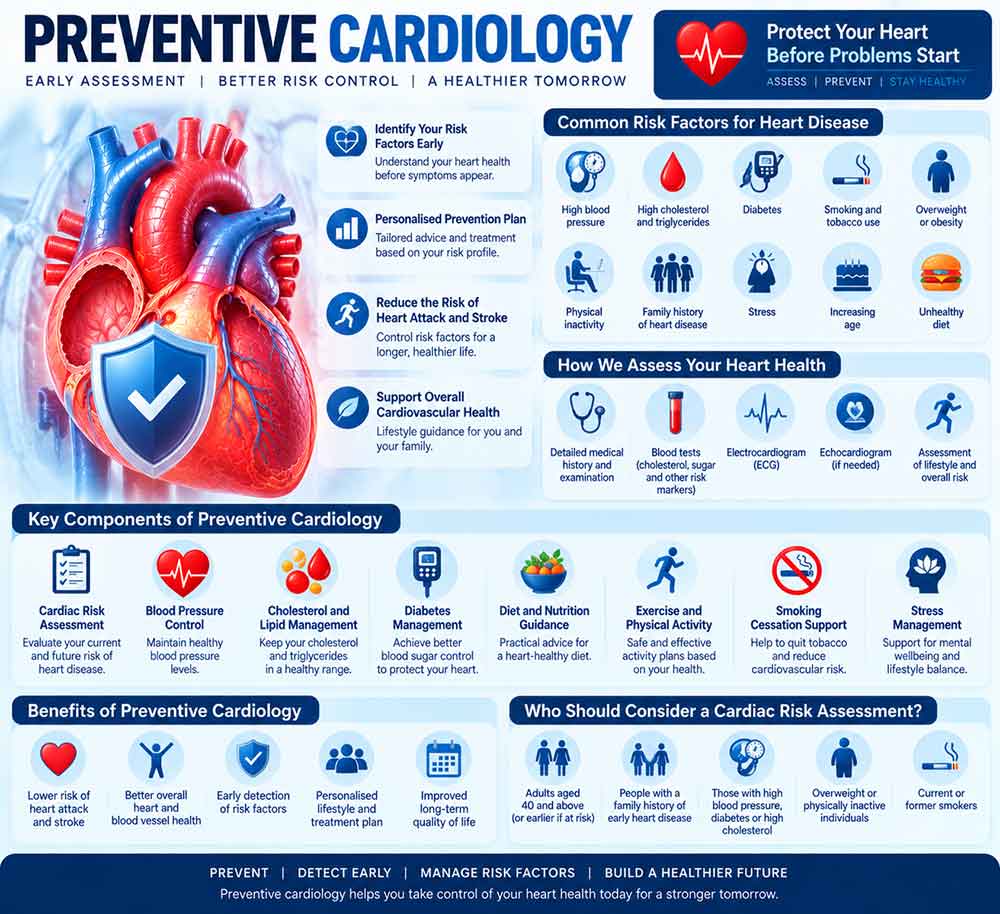
Preventive cardiology focuses on identifying cardiovascular risk factors early and taking appropriate steps to reduce the risk of heart disease, heart attack and stroke. It combines risk assessment, healthy lifestyle habits, screening when indicated and medical management of conditions that affect heart health.
You do not need to wait for symptoms to think about your heart health. If you are looking for preventive cardiology in HSR Layout, an assessment can help you understand your individual risk factors and the steps that may support long-term cardiovascular health.
What Is Preventive Cardiology?
Preventive cardiology aims to reduce the likelihood of developing cardiovascular disease or, for people who already have heart disease, help prevent further complications.
A preventive approach may involve:
Assessing blood pressure, cholesterol and blood glucose.
Reviewing family history and personal medical history.
Identifying lifestyle-related and medical risk factors.
Estimating cardiovascular risk when appropriate.
Discussing lifestyle changes and preventive treatment.
Monitoring progress through planned follow-up.
The approach is tailored to each person’s age, health status, risk factors and medical history.
Why Is Heart Disease Prevention Important?
Cardiovascular disease can develop over many years. High blood pressure, abnormal cholesterol levels, diabetes, tobacco use and physical inactivity can contribute to cardiovascular risk, sometimes without obvious symptoms.
Early identification of these factors creates an opportunity to address them before a serious event occurs.
Heart disease prevention may help reduce the risk of:
Coronary artery disease
Heart attack
Stroke
Heart failure
Other complications associated with cardiovascular disease
Prevention cannot eliminate every risk, but appropriate assessment and risk-factor management can make an important difference to long-term heart health.
Common Risk Factors for Heart Disease
High Blood Pressure
Persistently elevated blood pressure places additional strain on the heart and blood vessels. Regular measurement and appropriate management can help reduce cardiovascular risk.
High Cholesterol
Elevated LDL cholesterol can contribute to plaque formation in the arteries. Lipid testing and treatment, when indicated, are important parts of prevention.
Diabetes and High Blood Sugar
Diabetes can increase the risk of cardiovascular disease. Blood glucose management and assessment of associated risk factors are important for people living with diabetes.
Smoking and Tobacco Use
Tobacco use damages blood vessels and increases cardiovascular risk. Stopping smoking is an important preventive step.
Excess Weight and Physical Inactivity
Excess body weight and insufficient physical activity may contribute to high blood pressure, abnormal cholesterol and diabetes. A practical, sustainable activity and nutrition plan can help address these factors.
Family History and Age
A family history of premature cardiovascular disease may indicate increased risk. Age and other medical factors also influence the need for screening and preventive measures.
Cardiac Risk Assessment in HSR Layout
A cardiac risk assessment in HSR Layout can help identify factors that may increase your likelihood of developing cardiovascular disease.
Depending on your circumstances, an assessment may include the following.
Medical and Family History
Your doctor may review previous illnesses, family history of early heart disease, tobacco use, physical activity, diet and current medicines.
Blood Pressure Measurement
Blood pressure readings help identify hypertension, an important risk factor for heart disease and stroke.
Cholesterol and Blood Glucose Testing
Blood tests may be recommended to assess cholesterol levels, diabetes risk and other relevant metabolic factors.
Physical Examination
A clinical examination may help identify health concerns that require further investigation.
Cardiovascular Risk Evaluation
Your doctor may consider your age, blood pressure, cholesterol, diabetes status, smoking history and other relevant information to estimate cardiovascular risk and discuss preventive options.
Additional Tests When Needed
An ECG, echocardiogram or other cardiac investigation may be appropriate when symptoms, examination findings or medical history indicate a need. Not everyone requires every test, and the choice should be based on clinical assessment.
Who Should Consider Preventive Cardiology?
Preventive cardiovascular assessment may be useful for people who:
Have high blood pressure or high cholesterol.
Have diabetes or other metabolic risk factors.
Have a family history of premature heart disease.
Smoke or have previously used tobacco.
Have excess weight or limited physical activity.
Have several cardiovascular risk factors.
Want to discuss their cardiovascular health based on their age and medical history.
People who already have coronary artery disease, a previous heart attack or another established cardiovascular condition may need ongoing cardiovascular care in addition to preventive measures.
Heart Disease Prevention in HSR Layout
Heart disease prevention in HSR Layout involves more than a one-time health check. Long-term prevention often requires regular review of risk factors and consistent attention to daily habits.
Follow a Heart-Healthy Diet
Choose a balanced diet with vegetables, fruits, whole grains, pulses, nuts and other nutritious foods. Limit excess salt, highly processed foods and foods high in saturated or trans fats.
Stay Physically Active
Regular physical activity supports blood pressure, cholesterol, blood glucose and weight management. Choose activities appropriate for your health and increase activity gradually when needed.
Maintain a Healthy Weight
A sustainable weight-management plan can help improve several cardiovascular risk factors. Your goals should take your overall health into account.
Avoid Tobacco
Avoid smoking and other tobacco products. If you smoke, seek support to stop.
Manage Existing Medical Conditions
Follow your treatment plan for high blood pressure, diabetes and high cholesterol. Take prescribed medicines as directed and attend recommended follow-up appointments.
Prioritise Sleep and Stress Management
Consistent sleep and healthy ways of managing stress can support overall wellbeing. Discuss persistent sleep problems or concerns about your health with a qualified clinician.
Personalised Preventive Cardiology Care
Preventive care should be based on an individual’s cardiovascular risk rather than a single test result or a standard package of investigations.
Dr. Sreekanth Shetty’s verified professional profile and consultation information can help you determine whether his services are suitable for your preventive cardiovascular needs.
A consultation may be an opportunity to discuss your medical history, existing risk factors, available test results and whether further assessment is appropriate. Please confirm current clinic details and the specific services offered before booking.
Frequently Asked Questions About Preventive Cardiology
1. What is preventive cardiology?
Preventive cardiology focuses on identifying cardiovascular risk factors and managing them through appropriate lifestyle measures, medical treatment and follow-up to help reduce the risk of heart disease and related complications.
2. Who should consider a cardiac risk assessment?
People with high blood pressure, high cholesterol, diabetes, a family history of early heart disease, tobacco use or multiple cardiovascular risk factors may benefit from assessment. The appropriate timing and scope depend on individual circumstances.
3. Can heart disease be prevented?
Not every case can be prevented, but addressing modifiable risk factors can lower the risk of many cardiovascular events. Healthy habits, appropriate screening and prescribed treatment can all contribute.
4. Which tests are used in a cardiac risk assessment?
Depending on your health and medical history, assessment may include blood pressure measurement, cholesterol and blood glucose tests, a physical examination and a review of cardiovascular risk. ECG, echocardiography or other investigations may be recommended when clinically indicated.
5. Do I need a heart test if I have no symptoms?
Not everyone without symptoms needs an ECG, echocardiogram or advanced cardiac testing. Screening should be guided by your risk factors, age, medical history and clinical assessment.
6. How often should I have my cardiovascular risk reviewed?
The appropriate interval depends on your age, previous test results, existing conditions and overall risk. Your doctor can advise when to repeat tests or review your prevention plan.
7. Where can I enquire about preventive cardiology in HSR Layout?
Review Dr. Sreekanth Shetty’s verified profile and current clinic information to confirm consultation location, availability and suitability for your needs.
For additional information about healthy lifestyle habits and reducing cardiovascular risk, read the CDC guide to preventing heart disease