Leadless Pacemaker Specialist in Bangalore
Advanced Leadless Pacemaker Implantation in Bangalore | Dr. Sreekanth Shetty
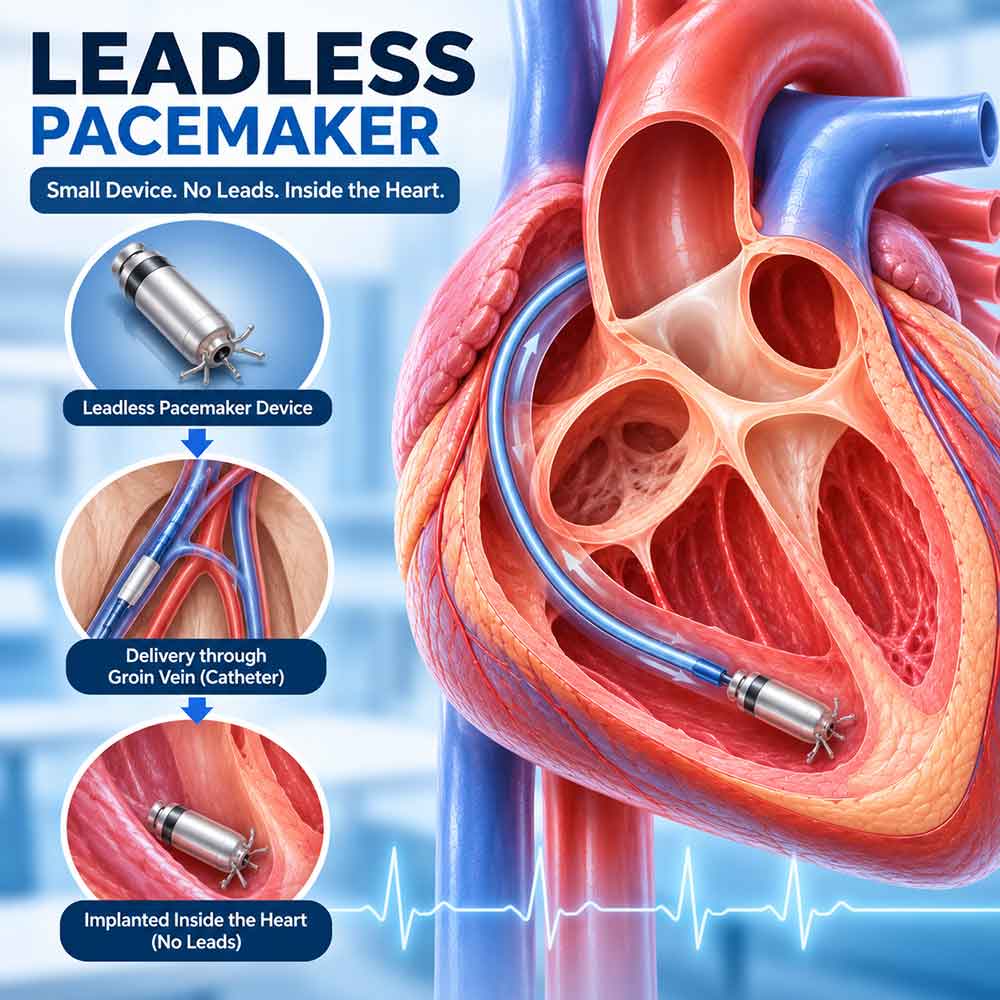
Are you looking for a leadless pacemaker in Bangalore? A leadless pacemaker is a small cardiac device designed to help regulate the heartbeat without the traditional wires, known as leads, or a pacemaker generator placed under the skin of the chest.
Patients diagnosed with a slow heart rate or certain heart rhythm disorders may benefit from an assessment to determine whether pacemaker treatment is necessary and which device may be suitable for their condition.
Dr. Sreekanth Shetty’s practice can be contacted to confirm consultation availability, eligibility assessment and leadless pacemaker implantation services. Patients from Bangalore, HSR Layout and nearby areas should confirm the consultation location and available services before booking.
What Is a Leadless Pacemaker?
A leadless pacemaker is a compact electronic device implanted directly inside the heart. Unlike a traditional pacemaker, it does not use separate wires running from the device into the heart, and it does not require a conventional generator pocket beneath the chest skin.
The device delivers electrical impulses to help regulate the heartbeat when the heart’s natural electrical system does not maintain an adequate rhythm.
A leadless pacemaker is delivered through a catheter, a thin, flexible tube that is usually introduced through a blood vessel in the groin. The device is guided into the heart and secured in the appropriate location.
Leadless pacemakers are not suitable for every patient. Their suitability depends on the person’s heart rhythm, pacing requirements, medical history and the capabilities of the specific device.
Who May Need a Leadless Pacemaker?
A pacemaker may be recommended for certain patients whose heart beats too slowly or whose electrical conduction system does not function properly.
Depending on the diagnosis, a specialist may consider pacemaker treatment for patients with conditions such as:
Symptomatic bradycardia, in which the heart rate is too slow
Certain types of heart block
Specific heart rhythm conditions that require pacing
Selected cases where conventional pacemaker leads or a chest pocket may present particular challenges
The decision requires a clinical assessment, review of the heart rhythm and consideration of other medical conditions.
Not every slow heartbeat requires a pacemaker. A clinician must determine whether the rhythm abnormality is responsible for symptoms and whether device treatment is appropriate.
Leadless Pacemaker Specialist in Bangalore
Patients searching for a leadless pacemaker specialist in Bangalore should seek a consultation that addresses their diagnosis, pacing needs and available device options.
During an evaluation, the treating specialist may review:
Symptoms such as dizziness, fatigue or fainting
Electrocardiogram (ECG) findings
Holter monitoring or other rhythm-monitoring results
Previous pacemaker procedures, if applicable
Existing medical conditions and current medications
Whether single-chamber or another form of pacing is required
The assessment helps determine whether a leadless device, a conventional pacemaker or another treatment approach is most appropriate.
Patients should ask about the doctor’s relevant experience, the implanting hospital, device availability and arrangements for follow-up care.
Leadless Pacemaker Implantation in Bangalore
Leadless pacemaker implantation in Bangalore involves placing a miniature pacing device inside the heart using a catheter-based technique.
The procedure is performed by a qualified medical team in an appropriately equipped clinical setting.
1. Pre-procedure evaluation
The team reviews the patient’s symptoms, heart rhythm investigations, medical history and pacing requirements. Additional tests may be required to determine the safest approach.
2. Catheter insertion
The procedure commonly uses access through a blood vessel in the groin. The medical team introduces a delivery catheter and guides it towards the heart using imaging.
3. Device placement
The leadless pacemaker is positioned inside the heart and secured at the selected site. The team checks its electrical performance and confirms appropriate placement.
4. Monitoring after implantation
After the procedure, the medical team monitors the patient’s condition, checks device function and provides instructions for recovery and follow-up.
The procedure, hospital stay and recovery period vary according to the patient’s condition, the device used and any complications. The treating team should explain what to expect in an individual case.
Benefits of a Leadless Pacemaker
For appropriately selected patients, a leadless pacemaker may offer several potential advantages over a conventional pacemaker.
No traditional pacing leads
The device does not require separate wires connecting a chest-mounted generator to the heart.
No conventional chest generator pocket
The device sits inside the heart rather than beneath the skin of the chest. This avoids the usual chest pocket created for a traditional pacemaker generator.
A catheter-based implantation approach
The device is delivered through a blood vessel rather than implanted using the conventional approach involving a chest incision and transvenous leads.
Potentially fewer lead- and pocket-related complications
Because leadless devices eliminate conventional pacing leads and the generator pocket, they avoid some complications associated with those components. However, they have their own risks and are not complication-free.
The actual benefits depend on the patient’s condition, device type and individual treatment requirements.
Leadless Pacemaker vs Traditional Pacemaker
Both types of pacemakers help manage certain heart rhythm disorders. However, they differ in their design and implantation method.
| Feature | Leadless pacemaker | Traditional pacemaker |
|---|---|---|
| Device location | Inside the heart | Generator beneath chest skin |
| Pacing wires | No separate transvenous leads | Uses one or more leads |
| Implantation | Usually through a blood vessel in the groin | Typically involves a chest incision and lead placement |
| Best suited for | Selected patients with compatible pacing needs | Patients whose pacing requirements match the available system |
| Main considerations | Device-specific pacing capabilities and implantation risks | Lead, pocket and generator-related considerations |
The appropriate choice depends on the type of heart rhythm disorder, whether one or more chambers need pacing, associated medical conditions and the features of the available device.
Some patients need pacing capabilities that a particular leadless device cannot provide. Therefore, a leadless pacemaker should not automatically be considered better than a traditional pacemaker.
Risks and Considerations
Leadless pacemaker implantation is a specialised cardiac procedure. Although it may avoid certain complications associated with conventional pacemaker leads and chest pockets, it can cause other complications.
Potential risks include:
Bleeding or blood vessel injury
Cardiac perforation or damage to heart tissue
Device displacement or problems with electrical performance
Infection or other procedural complications
The need for additional treatment if the device does not function as intended
The risks vary according to the patient’s health, the device and the procedure. Before treatment, discuss the expected benefits, possible complications, alternatives and long-term device management with the treating specialist.
Leadless Pacemaker in HSR Layout
Patients searching for a leadless pacemaker in HSR Layout may wish to explore local consultation options for heart rhythm evaluation and pacemaker treatment.
Before booking, confirm whether the consultation is available at the intended location and whether leadless pacemaker implantation is performed at the associated hospital.
Patients should bring previous ECGs, Holter reports, medical records, current medication details and any previous pacemaker information to their appointment.
A specialist evaluation can help clarify the diagnosis and determine whether a leadless pacemaker or another treatment approach may be suitable.
Leadless Pacemaker Specialist in HSR Layout
Choosing a leadless pacemaker specialist in HSR Layout involves more than finding a nearby clinic. Patients should confirm the specialist’s relevant qualifications, experience with cardiac rhythm disorders and access to an appropriate implantation team.
Important questions to ask during a consultation include:
What is causing my heart rhythm problem?
Do I need a pacemaker?
Is a leadless pacemaker appropriate for my pacing requirements?
What alternatives are available?
What are the potential risks and benefits?
How will the device be checked after implantation?
What follow-up arrangements will I need?
The answers can help patients understand their options and participate in informed treatment decisions.
Leadless Pacemaker Implantation in HSR Layout
Patients researching leadless pacemaker implantation in HSR Layout should confirm where the consultation and implantation procedure take place. The specialist consultation may occur at one location while the procedure is performed at an appropriately equipped hospital.
The treating team should explain the pre-procedure assessment, implantation approach, expected monitoring, recovery instructions and follow-up schedule.
The procedure should only proceed after an individual assessment confirms that the device is suitable and that the expected benefits justify the risks.
Recovery and Follow-Up After Leadless Pacemaker Implantation
Recovery varies from patient to patient. The medical team will provide specific instructions based on the procedure and the patient’s overall health.
After implantation, patients may need:
Observation before discharge
Instructions for caring for the catheter insertion site
Temporary restrictions on strenuous activity or heavy lifting
Device checks to assess function and battery status
Scheduled follow-up appointments
Patients should follow their treating team’s instructions and seek medical advice if they develop concerning symptoms such as increasing pain or swelling at the insertion site, fever, breathlessness, chest discomfort, dizziness or fainting.
Long-term follow-up remains important even though the device does not use traditional pacing leads.
Frequently Asked Questions
1. What is a leadless pacemaker?
A leadless pacemaker is a small cardiac device implanted inside the heart to help regulate certain abnormal heart rhythms. It does not require separate pacing leads or a conventional generator pocket beneath the chest skin.
2. Who is suitable for a leadless pacemaker?
Suitability depends on the heart rhythm disorder, pacing requirements, medical history and the specific device’s capabilities. A qualified specialist must assess whether leadless pacing is appropriate.
3. How is a leadless pacemaker implanted?
The device is generally delivered through a catheter inserted into a blood vessel, commonly in the groin. The catheter guides the device into the heart, where it is positioned and secured.
4. Is a leadless pacemaker better than a traditional pacemaker?
Neither option is best for everyone. Leadless pacemakers avoid conventional leads and a chest generator pocket, but their pacing capabilities and suitability differ from those of traditional systems. The treating specialist should recommend an approach based on individual needs.
5. How long does a leadless pacemaker last?
Battery longevity depends on the device model, pacing requirements and other factors. Your treating team can explain the expected battery life, monitoring arrangements and options when the battery approaches depletion.
6. Does a leadless pacemaker require follow-up?
Yes. Follow-up is necessary to assess device function, battery status and the patient’s clinical condition. Patients should attend all recommended device checks.
7. Where can I ask about leadless pacemaker implantation in Bangalore?
Contact Dr. Sreekanth Shetty’s practice to confirm consultation availability, the relevant services offered and the hospital where implantation may be performed.
For general information about pacemakers and leadless pacing technology, read the Wikipedia article on pacemakers.