Endovascular Aortic Repair in Bangalore
Endovascular Aortic Repair (EVAR) in Bangalore | Dr. Sreekanth Shetty
Endovascular Aortic Repair in Bangalore
Endovascular aortic repair is a minimally invasive approach used to treat selected conditions affecting the aorta, including certain abdominal aortic aneurysms. The procedure uses a catheter-delivered stent graft to create a new pathway for blood flow within the affected artery.
If you have been diagnosed with an aortic aneurysm, specialist assessment can help determine whether monitoring, endovascular repair or open surgery is the most appropriate option. The decision depends on the aneurysm’s location, size, shape, growth, symptoms, blood-vessel anatomy and your overall health.
What Is Endovascular Aortic Repair?
The aorta is the main artery carrying blood from the heart to the rest of the body. An aortic aneurysm develops when part of the artery wall weakens and expands.
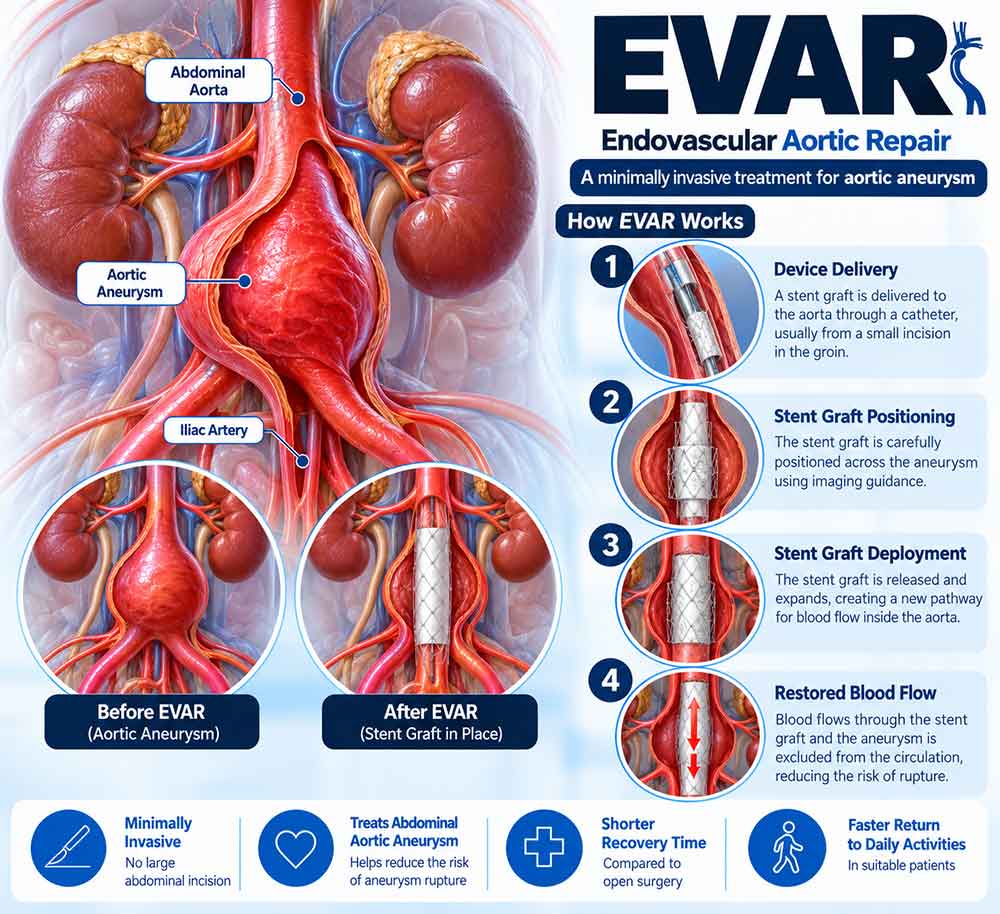
Endovascular aortic repair involves guiding a covered stent graft through the blood vessels and positioning it inside the affected section of the aorta. The graft provides a channel for blood to flow and helps isolate the aneurysm from direct blood pressure.
For selected abdominal aortic aneurysms, this procedure is commonly called endovascular aneurysm repair (EVAR). Aneurysms affecting other parts of the aorta may require different specialised procedures, so the exact treatment name and approach depend on the location.
When Is Endovascular Aortic Repair Considered?
Not every aortic aneurysm needs immediate repair. Some smaller aneurysms can be monitored with regular imaging, while others may require treatment because of their size, growth, symptoms or other clinical findings.
A specialist may assess:
The aneurysm’s size, location and shape.
Whether the aneurysm has enlarged on previous scans.
Whether symptoms may be related to the aneurysm.
The anatomy of the aorta and the arteries used to access it.
Other medical conditions and the risks of intervention.
Whether endovascular repair or open surgery offers the more appropriate balance of risks and benefits.
The decision should be made after reviewing the investigation results and discussing the options with the treating specialist.
Endovascular Aortic Repair Evaluation in Bangalore
Planning an endovascular procedure begins with a detailed assessment. The aim is to understand the aneurysm and determine whether the anatomy is suitable for a stent graft.
1. Review of Medical History
The specialist reviews symptoms, previous diagnoses, medications, blood pressure, smoking history and other relevant health conditions. Previous imaging reports and details of any earlier vascular procedures are also important.
2. Imaging and Aneurysm Assessment
An ultrasound may be used to identify and measure an abdominal aortic aneurysm. CT angiography is often needed when repair is being considered because it provides detailed information about the aorta, aneurysm and surrounding blood vessels.
Other tests may be recommended depending on kidney function, heart health and the planned procedure.
3. Treatment Planning
The specialist considers the aneurysm’s anatomy, the suitability of the access arteries, available stent-graft options and the patient’s overall fitness. Some aneurysms are suitable for standard EVAR, while others may require a more specialised procedure or open surgery.
4. Discussion of Benefits and Risks
Before treatment, patients should understand the purpose of the procedure, potential complications, alternative treatments and the need for follow-up imaging. The recommended plan should reflect the patient’s individual circumstances.
How Is the Endovascular Procedure Performed?
The procedure varies according to the type and location of the aneurysm. For standard abdominal EVAR, the process commonly includes the following steps.
Catheter Access
The specialist accesses the arteries, usually through the groin. A delivery system is guided through the blood vessels under imaging guidance.
Stent-Graft Positioning
The stent graft is moved into the planned position within the aorta. Imaging helps the team confirm its location and alignment.
Graft Deployment
The graft is released and expanded inside the aorta, creating a new channel for blood flow and helping exclude the aneurysm from circulation.
Completion Checks
The team checks blood flow and the position of the graft before completing the procedure. The patient is then monitored during recovery.
Not all aortic aneurysms can be treated with the same endovascular technique. The procedure depends on the location and anatomy of the aneurysm.
Endovascular Aortic Repair vs Open Surgery
Endovascular repair and open surgery are different approaches to treating selected aortic aneurysms.
Endovascular repair uses a catheter-delivered stent graft and usually requires smaller access incisions. In appropriately selected patients, the initial recovery may be shorter than after open surgery.
Open repair involves an operation to access the aorta directly and repair the affected section with a surgical graft. It may be preferred when the aneurysm’s anatomy is unsuitable for an endovascular approach or when other clinical considerations favour open surgery.
Neither approach is best for every patient. The specialist should explain which option is appropriate and why.
Benefits and Limitations of Endovascular Aortic Repair
For suitable patients, potential benefits may include:
Smaller access incisions compared with conventional open repair.
A shorter initial hospital stay or recovery period in some cases.
Treatment of an aneurysm when repair is clinically indicated.
An alternative to open surgery for selected patients.
Endovascular repair also has limitations. Not all aneurysms have suitable anatomy, and complications can occur after the procedure. The stent graft requires ongoing monitoring, and some patients need another intervention in the future.
Risks and Follow-Up After Endovascular Aortic Repair
Possible complications include bleeding, blood-vessel injury, infection, kidney injury related to contrast dye, blood clots, reduced blood flow to other organs or the legs, and problems with the graft.
An endoleak occurs when blood continues to enter the aneurysm sac after stent-graft placement. Other potential problems include graft movement or changes in the aneurysm sac.
Follow-up imaging is essential to check the graft and identify complications. The timing and type of scans depend on the procedure, scan findings and the patient’s clinical condition.
Aortic Aneurysm Treatment in Bangalore
Aortic aneurysm treatment begins with assessing the aneurysm and its potential risk. Depending on the findings, the management plan may involve regular imaging, control of cardiovascular risk factors, endovascular repair or open surgery.
A specialist consultation can help you understand your scan reports, whether repair is recommended and which treatment options may be appropriate for your condition.
Endovascular Aortic Repair in HSR Layout
Patients looking for endovascular aortic repair in HSR Layout can seek specialist advice about aneurysm assessment, imaging and available treatment approaches.
The appropriate treatment depends on the location and anatomy of the aneurysm, the patient’s overall health and the risks of intervention. Confirm the current consultation location and the availability of relevant vascular services before visiting.
EVAR in Bangalore and HSR Layout
EVAR is a type of endovascular repair most commonly used for selected abdominal aortic aneurysms. A specialist evaluation helps determine whether the aneurysm can be treated with a standard stent graft or whether another approach is required.
If you are searching for EVAR in Bangalore or HSR Layout, bring your scan reports and previous medical records to the consultation. Confirm the doctor’s current consultation location and the availability of EVAR assessment or treatment through the relevant hospital.
Recovery and Long-Term Monitoring
Recovery varies according to the procedure, the patient’s health and whether complications occur. The care team will provide instructions about activity, wound care, medicines and follow-up appointments.
Long-term imaging is important after endovascular aortic repair because complications can develop even when the patient feels well. Attend the recommended scans and follow-up appointments, and ask your care team which symptoms require urgent attention.
Frequently Asked Questions
What is endovascular aortic repair?
It is a catheter-based procedure in which a stent graft is placed inside the aorta to treat selected aneurysms and create a new pathway for blood flow.
Is endovascular aortic repair the same as EVAR?
EVAR stands for endovascular aneurysm repair and usually refers to repair of an abdominal aortic aneurysm. Endovascular procedures for aneurysms in other parts of the aorta may use different techniques.
Does every aortic aneurysm need surgery?
No. Some aneurysms can be monitored with regular imaging. Repair may be considered according to the aneurysm’s size, growth, symptoms, location and the patient’s overall health.
Is endovascular repair better than open surgery?
The most appropriate approach depends on the aneurysm’s anatomy, the patient’s health and the risks and benefits of each option. A specialist should discuss the alternatives for each individual.
What tests are needed before endovascular aortic repair?
Assessment may include ultrasound, CT angiography, blood tests and other investigations depending on the patient’s health and the procedure being considered.
Is follow-up necessary after EVAR?
Yes. Regular imaging helps monitor the stent graft and identify complications such as endoleaks or graft movement. Your treating team will recommend a follow-up schedule based on your circumstances.
Where can I ask about endovascular aortic repair in Bangalore?
You can arrange a consultation with Dr. Sreekanth Shetty to discuss your investigation reports and available treatment options. Confirm the current consultation location and the availability of the relevant procedure before booking.
For general information about the procedure, read the Wikipedia article on endovascular aneurysm repair.